Welcome to STA 210!
January 08, 2026
Welcome!
Meet Prof. Tackett!
- Education and career journey
- BS in Math and MS in Statistics from University of Tennessee
- Statistician at Capital One
- PhD in Statistics from University of Virginia
- Associate Professor of the Practice, Department of Statistical Science at Duke
- Work focuses on statistics education and inclusive teaching practices
- Co-leader of the Bass Connections team Mental Health and the Justice System in Durham County
- Mom of 3-year-old twins 🙂 (and one grumpy cat)
Meet the Teaching Assistants (TAs)!
Adeli Hutton (PhD): Lab 02 leader
Shane Rybacki (PhD): Lab 01 leader
Meet your classmates
Find a partner and share the following:
- Name
- Year
- Major or academic interests
- Highlight / something you enjoyed during winter break
Everyone will introduce their partner to the class.
Topics
Introduction to the course
Syllabus activity
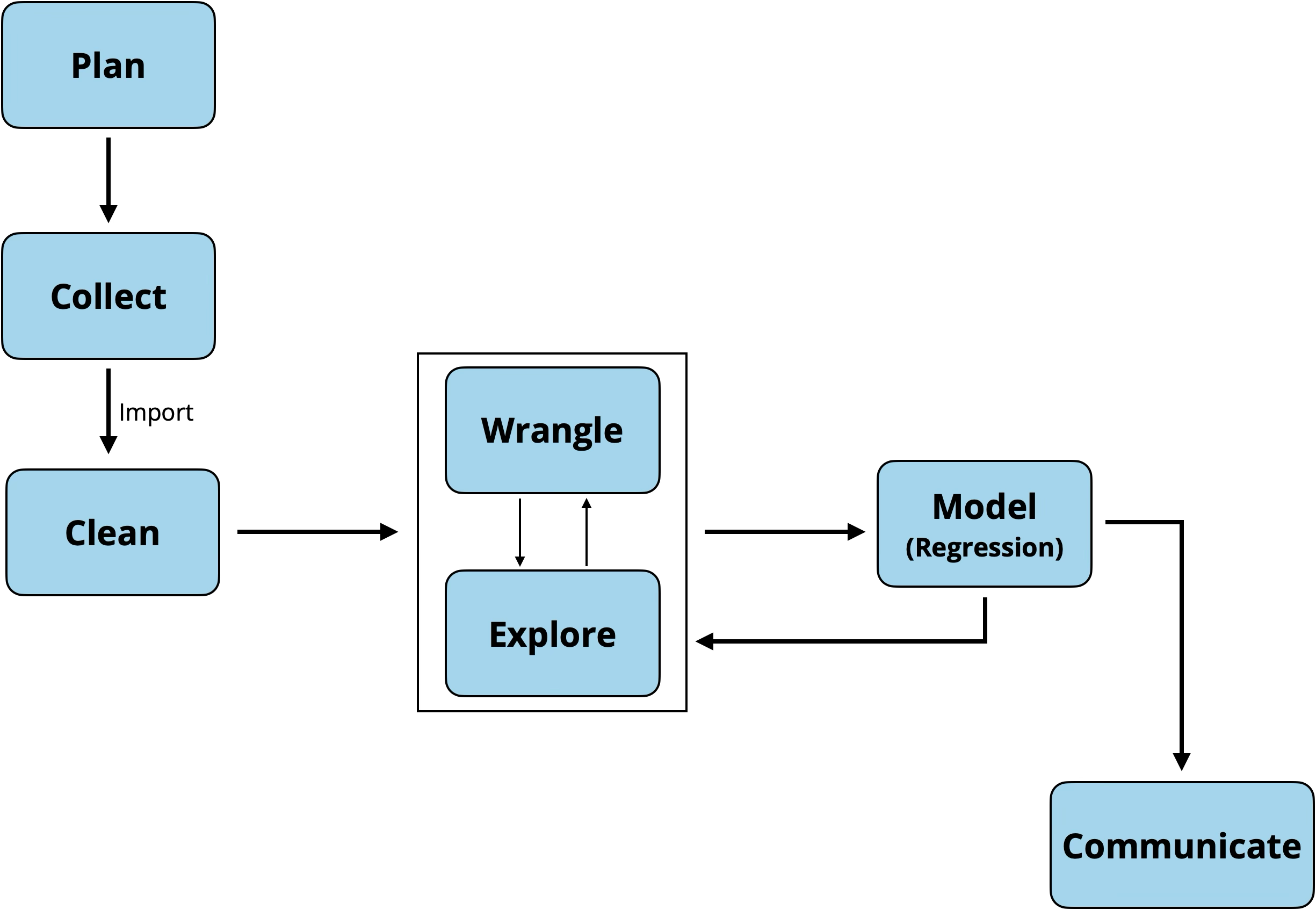
Data science workflow
What is regression analysis?
In statistical modeling, regression analysis is a statistical method for estimating the relationship between a dependent variable (often called the outcome or response variable, or a label in machine learning parlance) and one or more independent variables (often called regressors, predictors, covariates, explanatory variables or features).[1][2]
Source: Wikipedia (January 2026)
Linear regression in practice

Example: Reading Harry Potter
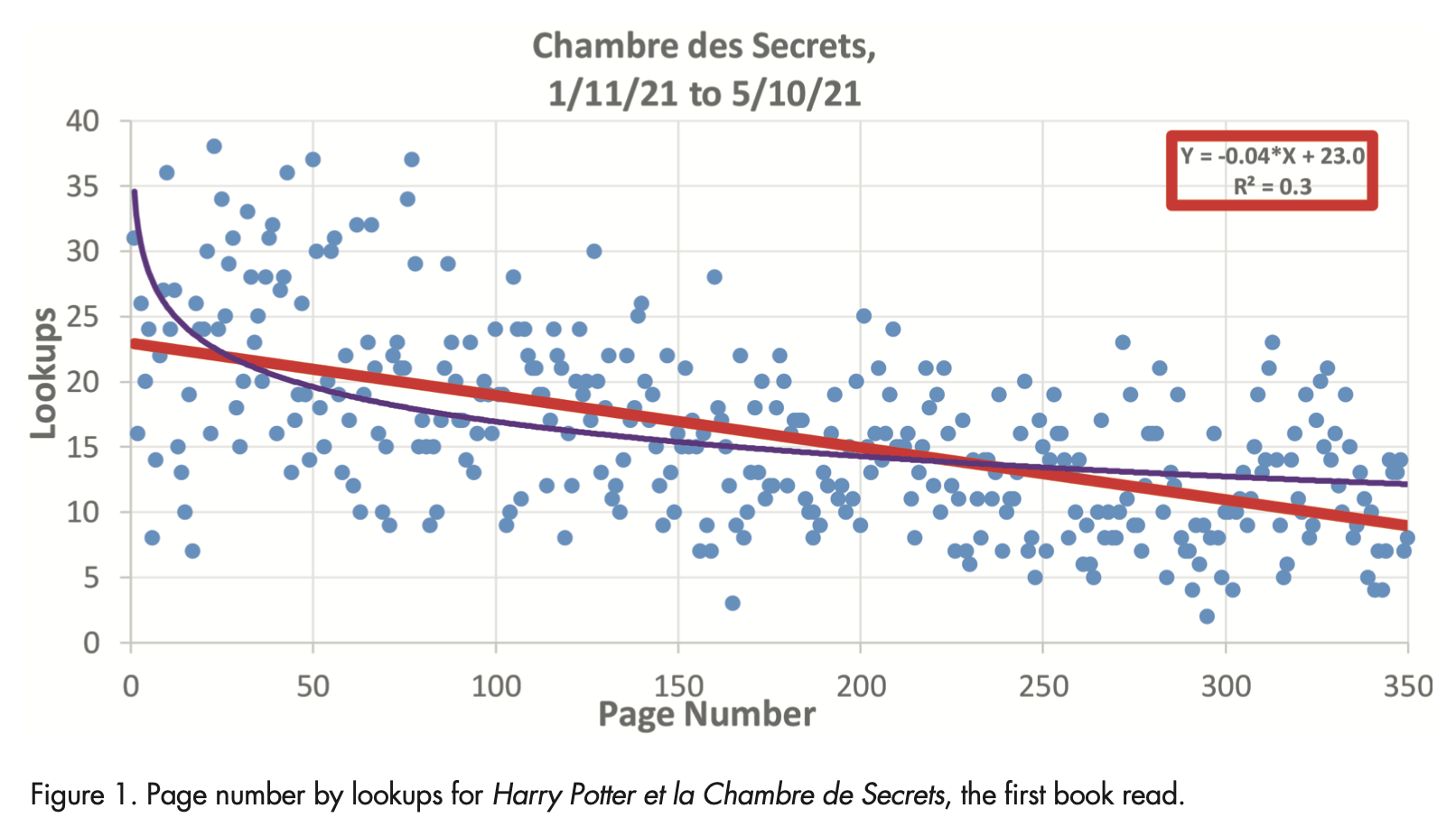
\[ \text{Lookups} = 23.0 - 0.04 \times \text{Page Number} \]
Logistic regression in practice
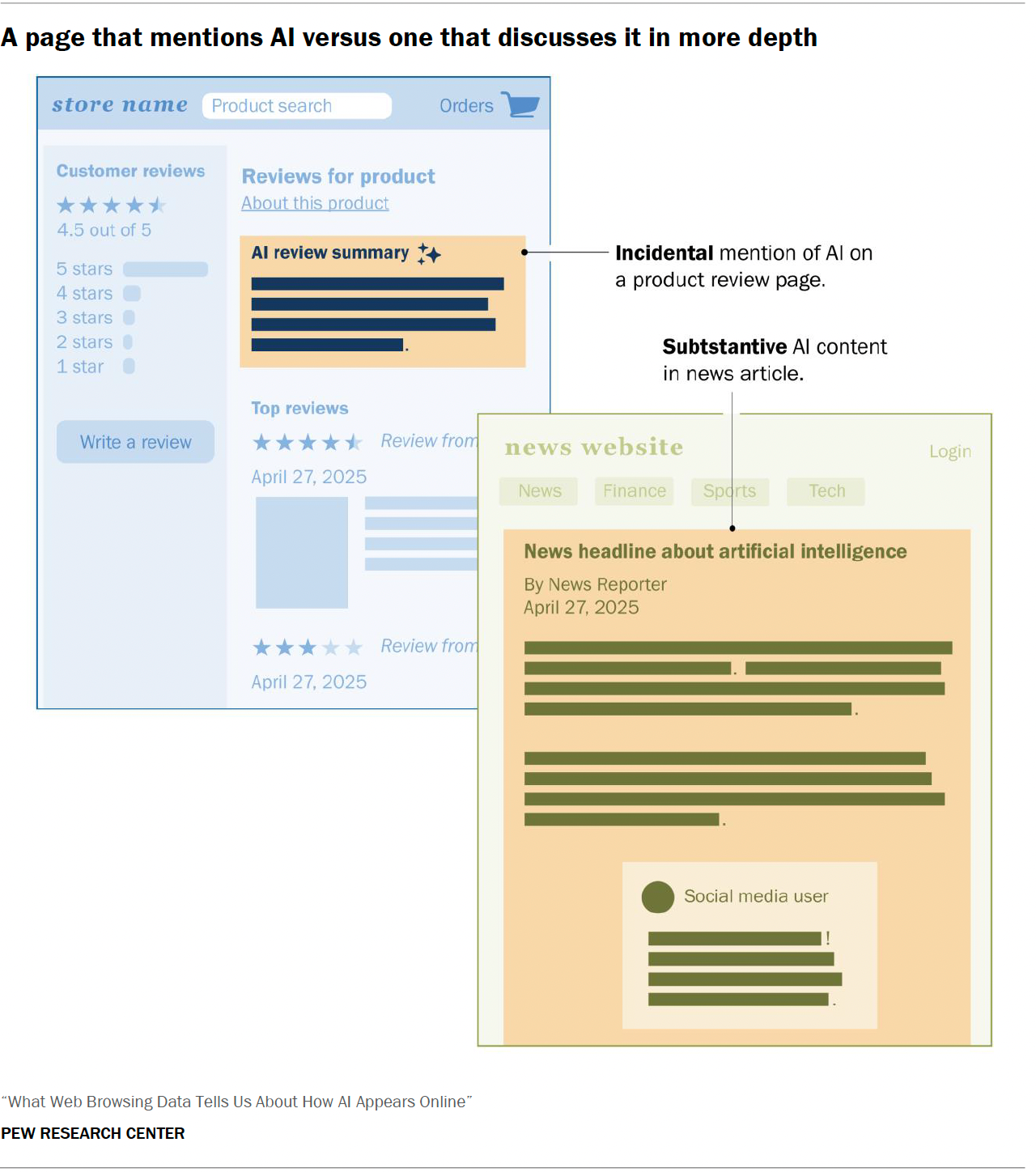
Pew Research Center conducted the 2025 What Web Browsing Data Tells Us About How AI Appears Online.
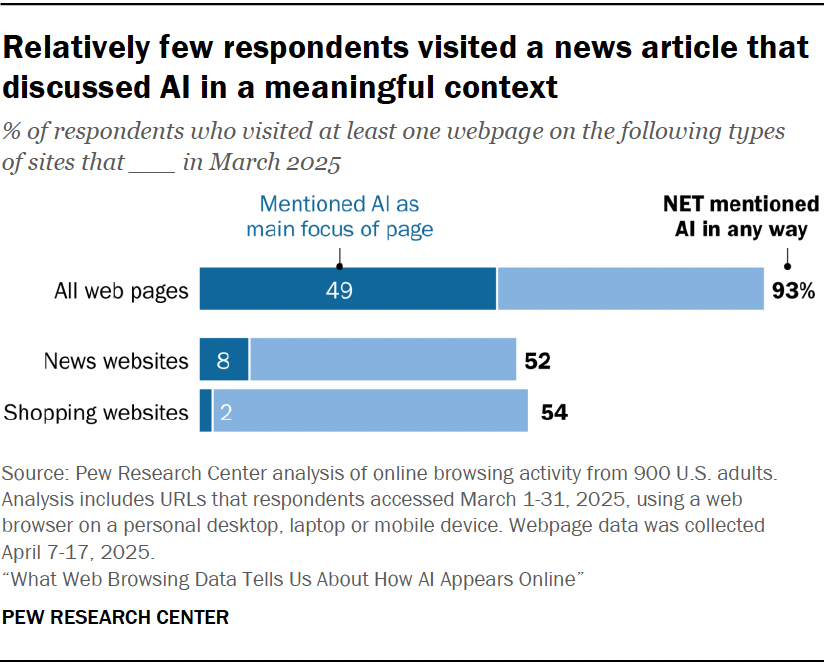
Example: AI mentions
Researchers used logistic regression to classify online articles in which AI was a central focus versus an incidental mention.
\[ \log\Big(\frac{\pi}{1-\pi}\Big) = \beta_0 + \beta_1X_1 + \dots + \beta_pX_p \]
STA 210
What is STA 210?
Learn how to use linear and and logistic regression models to analyze multivariable relationships and answer questions about real-world phenomena using a data-driven approach.
This course emphasizes application over mathematical theory.
Pre-requisites
100-level Statistical Science course or Statistical Science 230, 231, or 240L
Note
If you are interested in the theoretical aspects of regression and/or becoming a statistics major, STA 221 - Regression Analysis: Theory and Applications may be a better fit. Come talk with me after class!
Course learning objectives
By the end of the semester, you will be able to…
analyze real-world data to answer questions about multivariable relationships.
use R to fit and evaluate linear and logistic regression models.
assess whether a proposed model is appropriate and describe its limitations.
implement a reproducible analysis workflow using R for analysis, Quarto to write reports and GitHub for version control and collaboration.
effectively communicate statistical results to a general audience.
assess the ethical considerations and implications of analysis decisions.
Course topics
Linear regression
- Coefficient estimation and interpretation
- Prediction
- Inference
- Model evaluation
- Model assumptions and diagnostics
- Types of predictors
- Model comparison + cross validation
Logistic regression
- Coefficient estimation and interpretation
- Prediction
- Model evaluation
- Inference
Special topics
General topics
- Computing using R and GitHub
- Presenting statistical results
- Collaboration and teamwork
- Ethics
Course overview
Course toolkit
- Website: https://sta210-sp26.github.io
- Central hub for the course!
- Tour of the website
- Canvas: https://canvas.duke.edu/courses/68771
- Office hours
- Gradebook
- Announcements
- Gradescope
- Ed Discussion
- GitHub: https://github.com/sta210-sp26
- Distribute assignments
- Platform for version control and collaboration
Computing toolkit

All analyses using R, a statistical programming language
Write reproducible reports in Quarto
Access RStudio through Docker Containers (use containers labeled STA221)

Access assignments
Facilitates version control and collaboration
All work in STA 210 course organization
Classroom community
It is my intent that students from all diverse backgrounds and perspectives be well-served by this course, that students’ learning needs be addressed both in and out of class, and that the diversity that the students bring to this class be viewed as a resource, strength and benefit.
If you have a name that differs from those that appear in your official Duke records, please let me know.
Please let me know your preferred pronouns, if you are comfortable sharing.
If you feel like your performance in the class is being impacted by your experiences outside of class, please don’t hesitate to come and talk with me. If you prefer to speak with someone outside of the course, your advisers and deans are excellent resources.
I (like many people) am still in the process of learning about diverse perspectives and identities. If something was said or done in class (by anyone) that made you feel uncomfortable, please talk to me about it.
Accessibility
The Student Disability Access Office (SDAO) is available to ensure that students are able to engage with their courses and related assignments.
If you have documented accommodations from SDAO, please send the documentation as soon as possible.
I am committed to making all course activities and materials accessible. If any course component is not accessible to you in any way, please don’t hesitate to let me know.
Syllabus activity
- Introduce yourself to your group members.
- Choose a reporter. This person will share the group’s summary with the class.
- Read the portion of the syllabus assigned to your group.
- Discuss the key points and questions you my have.
- The reporter will share a summary with the class.
Syllabus activity assignments
Group 1: Labs
Group 2: Homework
Group 3: Exams
Group 4: Participation
Group 5: Academic honesty (except AI policy)
Group 6: AI policy
Group 7: Late work policy and waiver for extenuating circumstances
Syllabus activity report out
Group 1: Labs
Group 2: Homework
Group 3: Exams
Group 4: Participation
Group 5: Academic honesty (except AI policy)
Group 6: AI policy
Group 7: Late work policy and waiver for extenuating circumstances
Grading
| Category | Percentage |
|---|---|
| Labs | 10% |
| Homework | 15% |
| Exam 01 | 25% |
| Exam 02 | 25% |
| Final project | 20% |
| Participation | 5% |
Five tips for success in STA 210
Complete all prepare readings and tasks before class.
Actively participate and engage in lectures and labs.
Ask questions frequently during lecture, in office hours, on Ed Discussion, and among your classmates.
Complete all homework and labs, asking yourself “why” questions as you go through the steps to complete each exercise.
Stay current with the course material, as each new concept builds on previous ones.
Questions?
Minute paper
Submit your response to the question below. The form will record your NetID. 🔗 https://forms.office.com/r/r6fsAxjCqQ
Before next class
Complete Lecture 02 Prepare
Review the syllabus
Labs start on Monday, January 12
Office hours start on Monday, January 12